

The main objective of this project is to find solutions for purification of both R134a/SF6 and Xe/CO2 mixtures, which fulfills the followings important properties:
-
To avoid solutions with low safety;
-
To find solutions as common as possible for purifying the two mixtures R134a/SF6 and Xe/CO₂, considering that both detectors are part of the same CBM experiment;
-
To find solutions that are as reliable as possible, with low maintenance and relatively low costs.
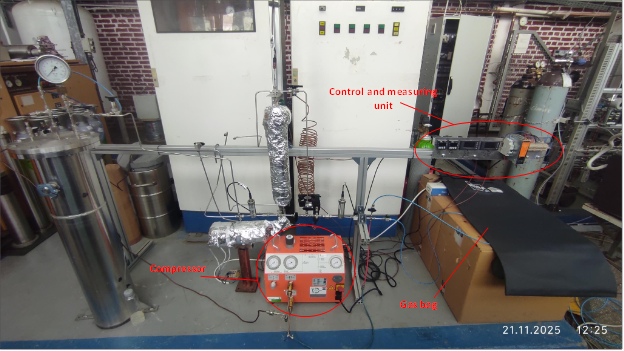
Figure 1. Prototype of a Closed-Type Experimental Setup for Studying Moisture Sorption from Various Gas Mixtures on Different Sorbents
The experimental stand is designed for use with the following gases and their mixtures: nitrogen (N₂), argon (Ar), xenon (Xe), carbon dioxide (CO₂), sulphur hexafluoride (SF₆), and tetra-Fluor ethane (R134a). The setup integrates modern components — a circulating compressor, a control and measurement unit, a gas holder, a cooler, and a moisture separator — ensuring a closed-loop operation and eliminating the loss of test gases to the environment. The use of pressure, temperature, and humidity sensors at key points of the circuit enables automated parameter control and enhances the reliability of measurement results. The developed adsorption and desorption procedures provide reproducible data on the dynamics of moisture sorption and desorption from various gas mixtures (N₂, Ar, Xe, CO₂, SF₆, R134a) on different sorbents. The design of the setup allows variation of gas composition, temperature, and pressure, making it a versatile tool for investigating a wide range of sorption materials.
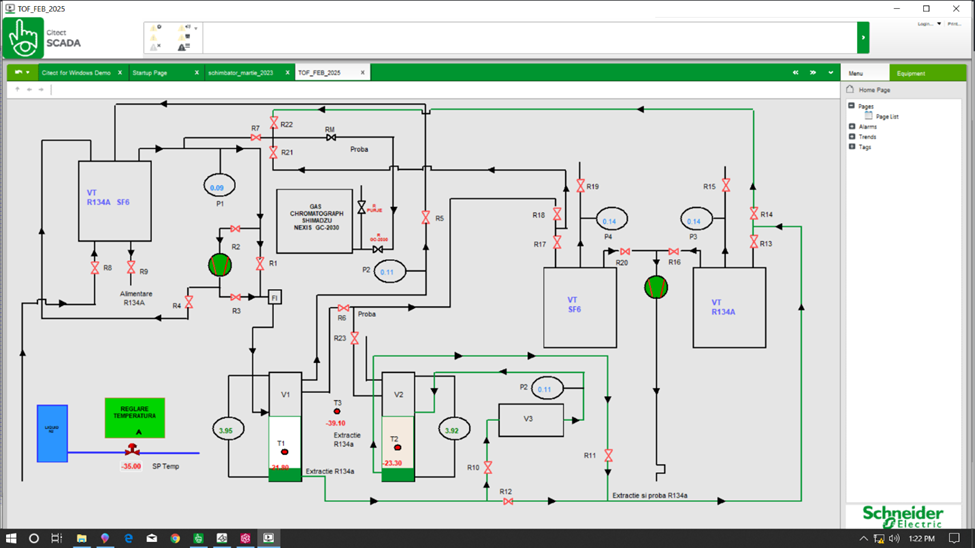
Figure 2. Experimental setup for separating the SF6 and R134a mixture with two vessels
In the previous report, in which a simulation was carried out in the Aspen HYSYS program, the possibility of using fractional distillation to remove air from the SF6/R134a mixture was determined, but only up to a maximum value of 290 ppm of air in the mixture. In practice, this method does not allow complete removal of air, not to mention the need for a specialized compressor to circulate the mixture through the rectification columns. For this reason, we began searching for other refrigeration/liquefaction methods with higher reliability and better results. Was developed an experimental setup with one and after that with two refrigeration/liquefaction vessels. After carrying out long-term tests and experiments, all of which demonstrated that it is indeed possible to achieve a separation of air from the two gases, SF6 and R134a. For the Xe/CO2 mixture, the same system will be used.