


Romanian participation at EUROfusion WPBB and complementary research – WPBB1-RO
Project director: George Ana (george.ana@icsi.ro)
Contract no: EURATOM-RO/CDI/2024-001 / 21.11.2024
Period: 2024 – 2026
Aim of the project
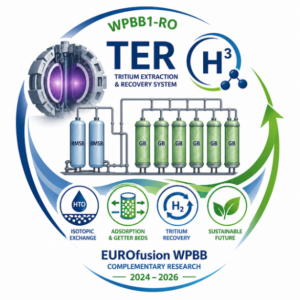
The reference process of the TER HCPB is based on tritiated moister adsorbed on reactive molecular sieve bed (RMSB) followed by elemental tritium adsorption, mainly as HT form, on getter beds operated at room temperature. In addition, in order to mitigate the concerns related to the increase failure rate due to large pressure difference between the purge gas and the cooling gas it was decided to increase the operation pressure of the purge gas at the same pressure of the cooling gas, meaning 80 bars. Aiming to keep the same HT partial pressure, around 1Pa, the volumetric purge gas flow rate is kept at the same value, meaning 10000 m3/h. This volumetric flow rate can be decreased if the moisture content is increased that will allow decreasing the HT partial pressure in the purge gas.
Design activities for the HCPB TER System are intended as ex-vessel component including the piping system that interface at level of VV the BB System and at level of the Tritium Building the Fuel Cycle System. The system includes the He purge loop with the He removal system and the relative auxiliary systems that recover tritium for the Fuel Cycle.
Therefore, the objectives of this project is to enhance the configuration of the TER for solid breeders by achieving new and also using the already available R&D results and to further develop the concepts of its main components. The main aim of the project is to achieve the Reference conceptual design for the Tritium Extraction and Recovery System for solid breeders like the Helium Cooled Pebble Bed breeder.
Activities foreseen
-
R&D and design activities for development of HCPB TER system
-
Activities for further development of main equipment concepts for HCPB TER
-
Detailed design of a getter bed mock-up based on ZrCo and ZAO materials at a scale of 1:20
-
Design and partial construction of an experimental rig for GB mock-up testing in TER relevant conditions
-
Manufacturing of a GB mock-up
-
Final construction an commissioning of the GB mock-up testing rig
Results 2024 – 2025
1. Definition and optimisation of process requirements for the TER WLCB system
Definition and optimisation of the Tritium Extraction and Recovery (TER) process requirements for the Water-Cooled Lead Ceramic Breeder (WLCB), using the TER HCPB configuration as a technical reference is a critical objective for the tritium self-sufficiency of DEMO reactor.
This work focuses on identifying operating conditions that enable efficient tritium extraction while reducing system complexity and energy demand. The analyses include:
-
Evaluation of purge gas throughput as a function of hydrogen isotope content
-
Assessment of the impact of reduced flow rates on isotope partial pressures
-
Analysis of superficial velocity and pressure drop in the Reactive Molecular Sieve Beds (RMSB), using packed-bed correlations
-
Evaluation of energy consumption for different operating pressures and volumetric flow rates
F
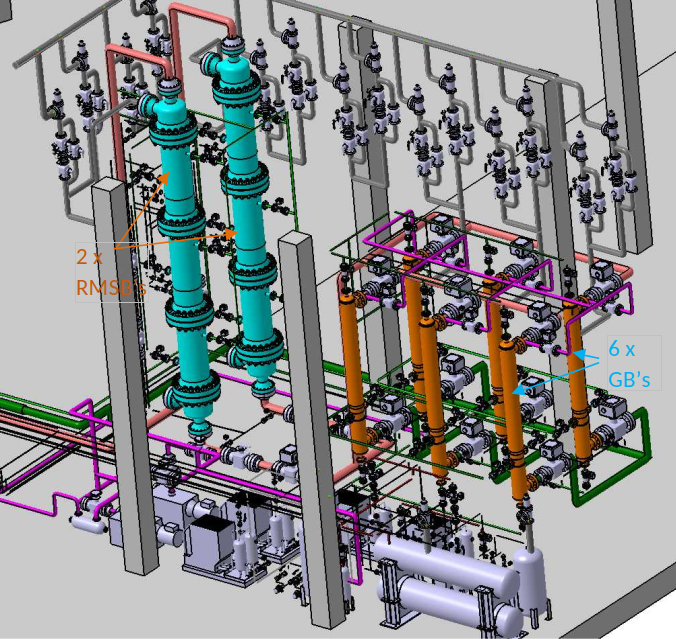
Figure 1. Overview of TER system equipment inside Tritium Plant building – preliminary layout
The results demonstrate that lowering purge gas flow rates increases hydrogen isotope partial pressures while significantly reducing gas velocities and pressure losses. In parallel, reduced operating pressure lowers compression power requirements and relaxes mechanical design constraints. Together, these findings support a more hydraulically efficient and energetically favourable TER concept for WLCB.
2. Experimental validation and performance optimization of RMSB and getter bed technologies
RMSB – Isotopic exchange optimization
A 1:10 scale RMSB mock-up was used to consolidate and extend isotopic exchange tests between hydrogen and deuterated water adsorbed on platinized zeolite.
The test campaign investigated:
-
Platinum loadings of 0.3, 0.5 and 0.7 wt%
-
Operating temperatures between 25 °C and 120 °C
-
Deuterium extraction efficiency over a 10-hour exchange period
The results confirm that both increasing temperature and increasing Pt content enhance isotopic exchange efficiency. Above 80 °C, the system approaches quasi-steady behaviour, indicating reduced kinetic limitations. From a combined performance–cost perspective, a platinum content of approximately 0.5 wt% was identified as a balanced solution.
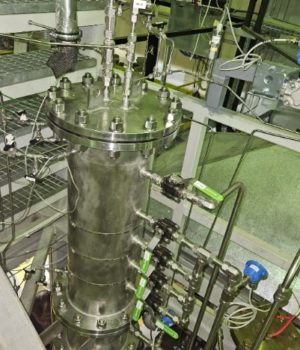
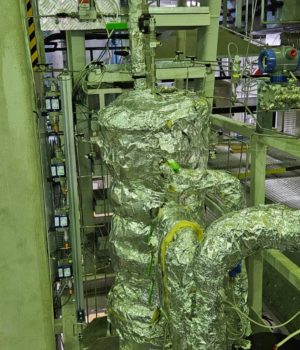
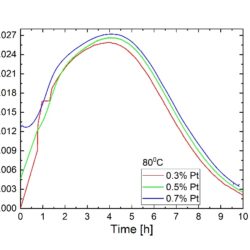
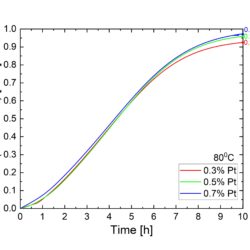
Figure 2. Images of the mock-up placed in the rig and experimental results
Getter Bed – Structural integrity and endurance behaviour
In parallel, a ZAO-based getter bed mock-up was integrated into an upgraded experimental loop to assess hydrogen absorption–desorption behaviour under controlled conditions.
Six absorption–desorption cycles were performed, with hydrogen loading limited below the embrittlement threshold. Desorption was conducted at elevated temperatures (650–750 °C). While hydrogen uptake and release were successfully demonstrated, the tests revealed irregular behaviour and mechanical degradation of the ZAO discs after dismantling.
These results provide valuable insight into material durability, flow distribution effects, and thermal cycling constraints relevant for long-term operation.
3. Development of experimental infrastructure for hydrogen isotope permeation studies
Development of a dedicated experimental capability to investigate hydrogen isotope permeation from gas to water is a phenomenon of direct relevance for water-cooled blanket concepts.
This activity included:
-
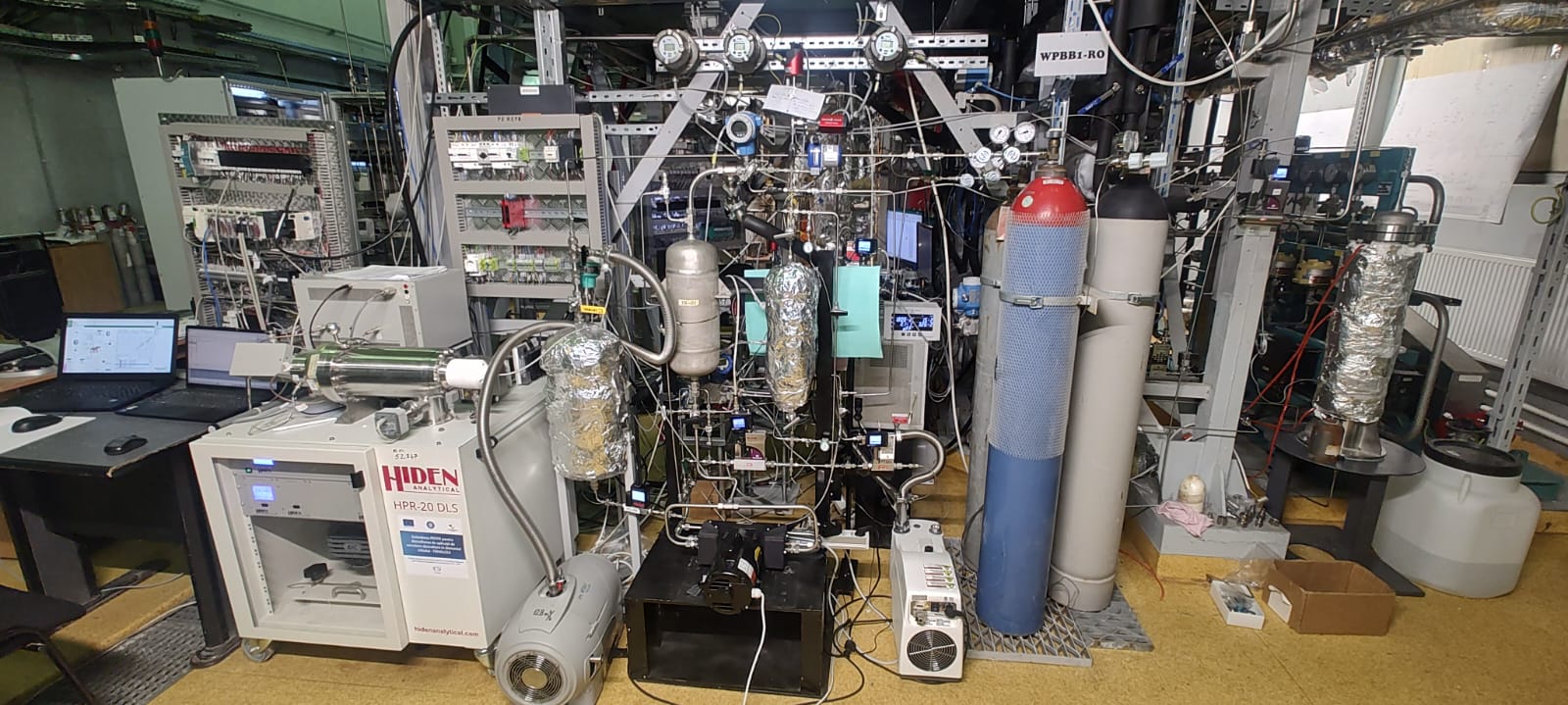
Design and manufacturing of two permeation cells (SS316 and P92)
-
Construction of a high-temperature (up to 300 °C) and high-pressure experimental rig
-
Implementation of pressure control and overpressure protection logicCalibration of gas-phase isotope measurements using QMS
-
Isotopic analysis of water samples using mass spectrometry
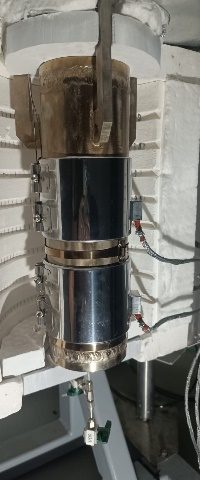
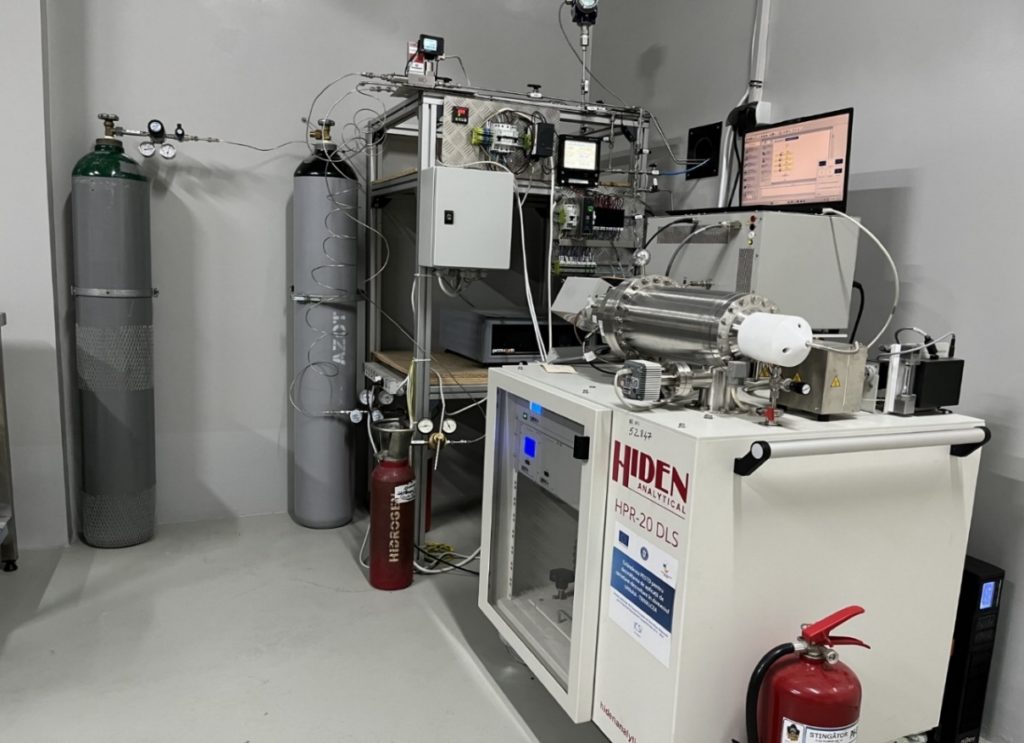
Figure 4. Permeation cell (left) and general view of the control and electrical panel and QMS for permeated deuterium measurement (right)
Preliminary permeation tests at 300 °C demonstrated measurable deuterium transfer from the gas phase into water, with approximately 37.7% of the deuterium lost from the gas being detected in the aqueous phase.
This infrastructure establishes the experimental basis for future systematic studies on material selection, permeation modelling, and safety assessment in WLCB-type systems.
4. Heat transfer enhancement strategies for ZrCo packed getter bed and ZAO sintered disc type getter
Getter beds based on zirconium–cobalt (ZrCo) hydrides represent a promising alternative to cryogenic molecular sieve beds for hydrogen isotope removal in helium purge loops of fusion blanket tritium extraction systems. However, regeneration of ZrCo getter beds requires heating to approximately 400 °C under vacuum, where convective heat transfer becomes negligible and thermal performance is limited by the inherently low effective conductivity of packed hydride material.
Computational Fluid Dynamics (CFD) simulations were conducted to identify and evaluate the heat transfer coefficients associated with various design configurations and hot gas flow rates. Prior to these simulations, it was necessary to either identify in the existing literature or empirically determine the morphological characteristics and thermo-physical properties of the getter materials (ZrCo and ZAO), as these directly influence the thermal performance and flow dynamics within the system.
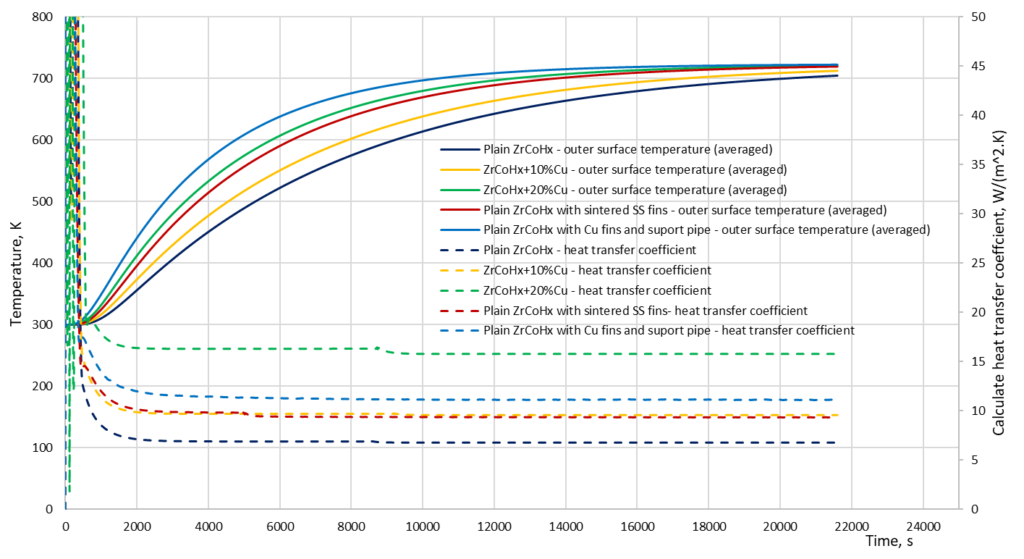
Figure 5. CFD results of heat transfer for different ZrCoHx bed configurations
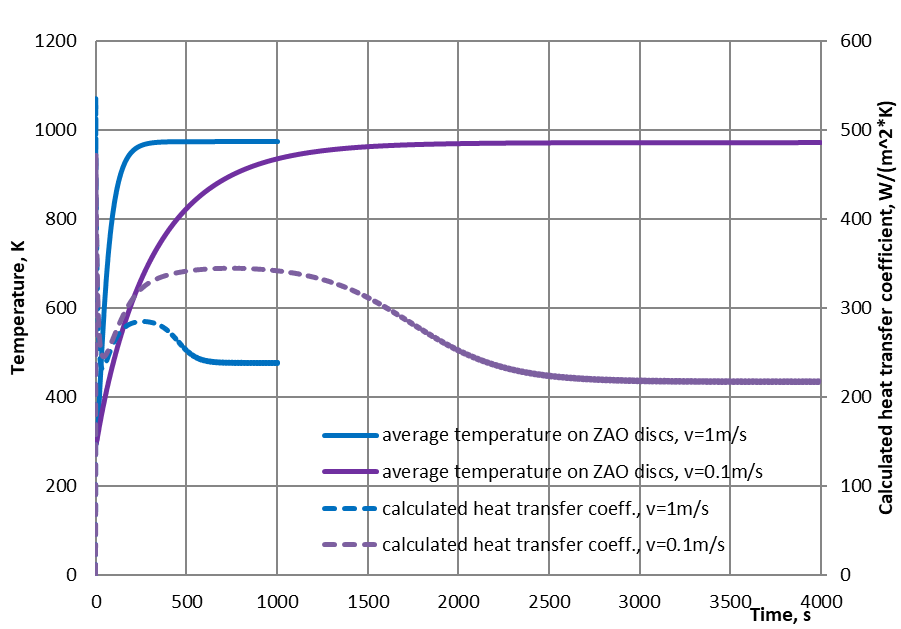
Figure 6. CFD results of heat transfer for a specific ZAO getter configuration for different inlet helium velocity of 1 m/s and 0.1 m/s
5. Design of a getter bed mock-ups based on ZrCo and ZAO materials at a scale of 1:20
During this reporting period, progress has been achieved in the design and preliminary validation of a getter bed (GB) mock-up representative of the HCPB Tritium Extraction and Recovery (TER) system. The work focused on two core objectives: (1) the detailed design of a 1:20 scale mock-up based on ZrCo and ZAO getter materials, and (2) the initial development and construction of an experimental rig enabling operational testing under TER-relevant conditions.
A first step consisted of establishing the operating flowrates for mock-up adsorption tests, respecting the helium purge gas conditions of the HCPB blanket, in particular the hydrogen partial pressure of ~100 Pa. A suitable operating point of 20 SCCM hydrogen diluted in a 3 bar helium stream (total flow ~3.6 Nm³/h) was selected to ensure representativeness while maintaining manageable equipment dimensions. Based on scaling from DEMO requirements, the mock-up incorporates ~19 kg ZrCo and ~1.5 kg ZAO, with calculated adsorption times of approximately 400 h and 48 h, respectively.
The ZrCo unit was designed to maximize exposure of ZrCo granules to the purge gas while preventing granule displacement and bypassing. This was achieved using a sequence of SIPERM® R permeable plates, compartmented beds, and a combined distribution–collection architecture ensuring uniform through-bed flow. For regeneration, where desorption occurs under vacuum at ~400 °C, the assembly was optimized for conductive heat transfer to guarantee uniform temperature distribution across the ZrCo mass.
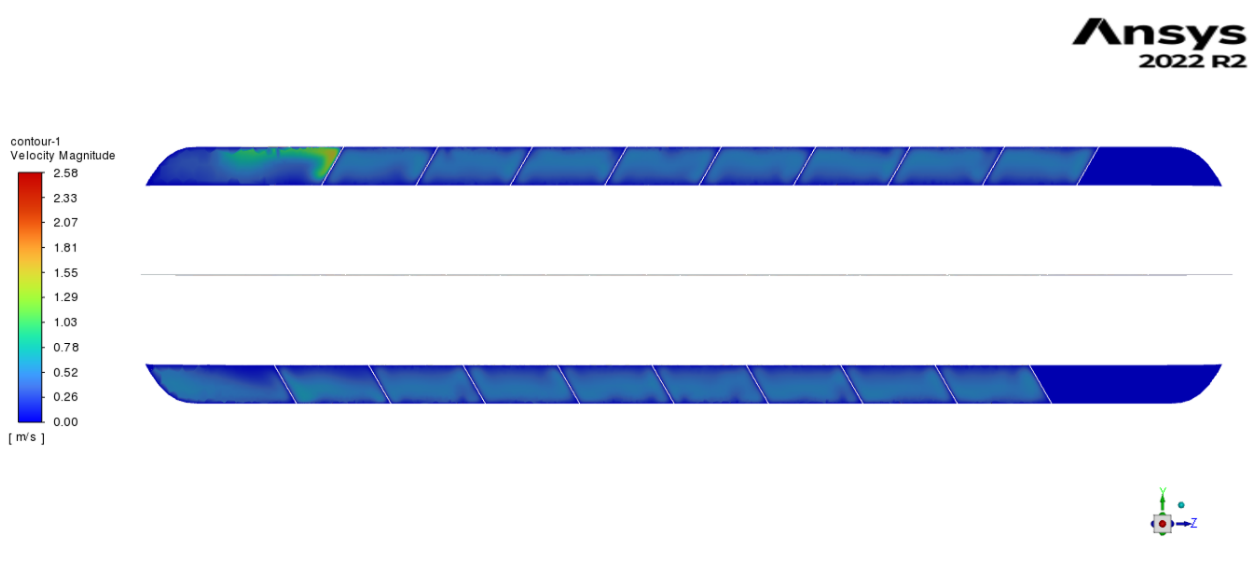
Figure 7. CFD assessment of hot-gas distribution in the jacketed ZrCo bed
The ZAO unit, consisting of seven tubes each loaded with seventy sintered discs, was developed to promote both efficient adsorption and fast desorption at ~700 °C. Trilobed Helical Supports (THS) made of GLIDCOP® AL-15 were introduced beneath each disc to enhance turbulent boundary-layer renewal during adsorption and to maximize conductive heating during desorption.
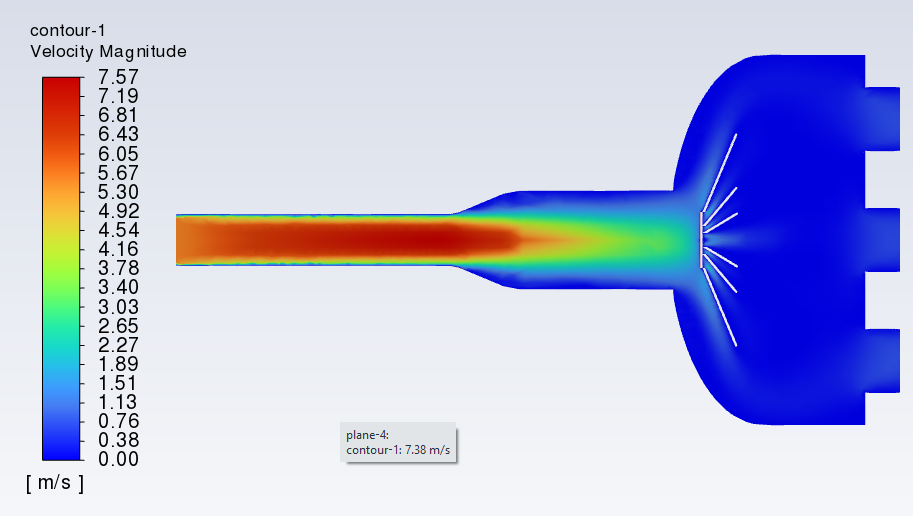
Figure 8. CFD simulation results for the tri-conical gas deflector. Left: velocity magnitude contours in the longitudinal plane showing smooth radial redirection of the inlet jet. Right: velocity distribution at the outlet plane, indicating uniform flow through the seven getter tubes for nominal operating parameters
Extensive CFD analyses supported the design choices. For the ZrCo unit, simulations of hot-gas circulation within the surrounding heating jacket demonstrated that tilted baffles create a stable flow pattern, ensuring broad coverage of the heating surface and preventing thermal short-circuiting. Similar CFD studies were conducted for the ZAO unit. A tri-conical gas deflector was shown to transform the inlet jet into a uniform radial flow toward the seven ZAO tubes, while additional simulations confirmed effective hot-gas sweeping over the disc stacks during regeneration.
Conferences and Workshops
-
George Bulubasa, George Ana, Ovidiu Balteanu, Radu Ana, Maria Craciun, Alina Niculescu, Tritium extraction from helium purge gas in fusion reactors – A Key Component in Achieving Fuel Self-Sufficiency and Energy Efficiency, “23rd International Balkan Workshop on Applied Physics and Materials Science”;
-
Maria Craciun, George Bulubasa, George Ana, Alina Niculescu, Ciprian Bucur, Iulia Stefan, Robert Daramus, Characterization of reactive zeolites for tritium extraction from fusion reactor purge gas, “23rd International Balkan Workshop on Applied Physics and Materials Science”;
-
George Ana, Ovidiu Balteanu, Ciprian Bucur, Radu Ana, Non-evaporable getter materials for tritium capture in fusion reactor purge systems: a preliminary study, “23rd International Balkan Workshop on Applied Physics and Materials Science”.
Papers:
-
George Ana, George Bulubasa, Alina Niculescu, Maria Craciun, Ciprian Bucur, Iuliana Stefan, Characterization of water adsorption capacity at high pressure of the molecular sieve proposed to be used in TER RMSB, Fusion Engineering and Design 215 (2025) 115039;
-
Alina Niculescu, Maria Craciun, George Ana, Gheorghe Bulubasa, ICSI contributions regarding barriers against hydrogen isotope permeation through stainless steel and EUROFER97 in DEMO applications, Journal of Fusion Energy (2026) 45:16, https://doi.org/10.1007/s10894-026-00560-4.